
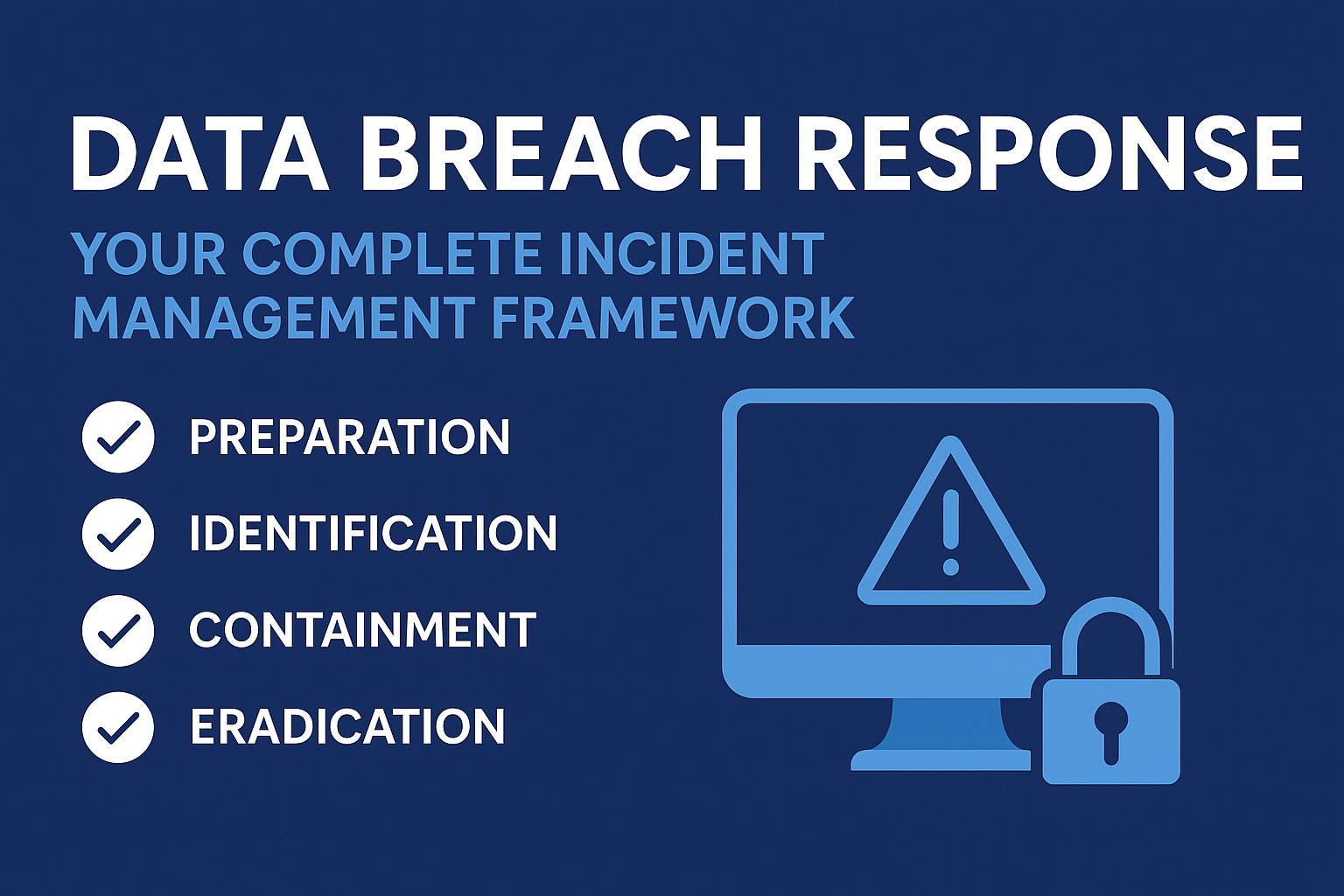
Data breaches represent existential threats to modern organizations, exposing sensitive information, triggering regulatory penalties, eroding customer trust, and causing financial devastation. IBM's 2024 Cost of a Data Breach Report reveals average breach costs exceeding $4.45 million globally, with India-specific breaches averaging ₹17.9 crores. Beyond direct costs, organizations face regulatory fines, litigation expenses, business disruption, and long-term reputational damage. Effective incident response frameworks minimize damage, ensure regulatory compliance, and enable rapid recovery.
Understanding Data Breach Landscape
What Constitutes a Data Breach?
Data breaches involve unauthorized access, acquisition, disclosure, or destruction of personal or sensitive information. Common breach scenarios include:
- Cyberattacks: Ransomware, malware, phishing, SQL injection, and advanced persistent threats
- Insider Threats: Malicious employees, negligent handling, unauthorized access by privileged users
- Third-Party Breaches: Vendor security failures, supply chain compromises, cloud service breaches
- Physical Security: Stolen devices, lost backup media, unauthorized physical access
- Human Error: Misconfigured systems, misdirected emails, improper disposal of records
Regulatory Notification Requirements
Multiple regulations impose breach notification obligations with varying timelines and thresholds:
GDPR (Europe)
- Authority Notification: 72 hours from awareness (unless unlikely to risk rights and freedoms)
- Individual Notification: Without undue delay when likely to result in high risk
- Penalties: Up to €20 million or 4% of global turnover for non-compliance
DPDPA 2023 (India)
- Data Protection Board Notification: Timeline to be specified in Rules
- Individual Notification: Required when breach likely to cause harm
- Documentation: Maintain breach register with details, impacts, and remedial actions
Sector-Specific Requirements
- RBI (Financial Sector): Report cyber incidents to CERT-In and RBI within 2-6 hours
- SEBI (Capital Markets): Immediate reporting of cybersecurity incidents
- HIPAA (Healthcare): Varied timelines based on breach scale and impacted individuals
Critical Timeline: The clock starts when breach is "discovered," not when investigation completes. Organizations must balance thorough investigation needs with notification deadlines. Delayed notifications carry severe regulatory consequences beyond initial breach impacts.
Six-Phase Incident Response Framework
Phase 1: Preparation
Effective response begins long before incidents occur:
Incident Response Team
Establish cross-functional team including:
- Incident Commander: Overall response coordination and decision authority
- IT Security: Technical investigation, containment, and eradication
- Legal Counsel: Regulatory guidance, privilege protection, litigation risk
- Privacy Officer: Data subject impact assessment, notification coordination
- Communications: Internal messaging, external communications, media relations
- HR: Employee communications, insider threat investigations
- Business Continuity: Operational recovery and resilience
- External Partners: Forensic investigators, cyber insurance, breach coaches
Incident Response Plan
- Roles and Responsibilities: Clear definition preventing confusion during crisis
- Escalation Procedures: Decision trees and thresholds triggering escalations
- Contact Lists: Current contact information for team members, vendors, authorities
- Communication Templates: Pre-approved messaging for regulatory notifications, customer communications
- Documentation Requirements: Logging standards ensuring evidence preservation
- Tool Inventory: Forensic tools, backup systems, communication channels
Detection Capabilities
- Security Information and Event Management (SIEM) systems
- Intrusion Detection/Prevention Systems (IDS/IPS)
- Data Loss Prevention (DLP) tools
- User and Entity Behavior Analytics (UEBA)
- Endpoint Detection and Response (EDR) platforms
Training and Testing
- Annual incident response tabletop exercises
- Breach simulation drills testing notification procedures
- Role-specific training for response team members
- General employee awareness on breach indicators and reporting
Phase 2: Detection and Analysis
Rapid, accurate detection determines response effectiveness:
Detection Sources
- Security tool alerts (SIEM, IDS, DLP)
- Employee reports of suspicious activity
- Customer complaints about unauthorized access
- Law enforcement notifications
- Third-party vendor breach disclosures
- Media or researcher reports
Initial Assessment
Upon detection, immediately assess:
- Incident Scope: What systems, data, and processes are affected?
- Data Types: What categories of personal data were accessed (names, financial data, health records, credentials)?
- Impact Scale: How many individuals potentially affected?
- Attack Vector: How did breach occur (malware, phishing, misconfiguration)?
- Ongoing Threat: Is attacker still present in environment?
- Severity Classification: Critical, high, medium, or low based on impact potential
Evidence Preservation
- Isolate affected systems without destroying evidence
- Create forensic images before analysis
- Preserve logs, network captures, and system snapshots
- Document chain of custody for all evidence
- Engage forensic specialists for complex investigations
Phase 3: Containment
Stop breach progression while preserving business operations:
Short-Term Containment
- Network Segmentation: Isolate compromised systems from network
- Access Revocation: Disable compromised accounts and credentials
- System Quarantine: Take affected systems offline if necessary
- Traffic Blocking: Block malicious IPs and domains at firewall
- Backup Isolation: Protect backups from ransomware encryption
Long-Term Containment
- Patch vulnerabilities exploited in breach
- Implement temporary security controls
- Enhance monitoring on affected systems
- Rebuild clean systems if compromise is severe
Business Continuity
- Activate business continuity plans for critical systems
- Implement workarounds maintaining essential operations
- Communicate status to stakeholders
- Document containment actions and decisions
Phase 4: Eradication
Remove threat actor presence and eliminate vulnerabilities:
- Malware Removal: Eliminate malicious software from all affected systems
- Backdoor Elimination: Identify and remove persistence mechanisms
- Vulnerability Remediation: Patch or mitigate exploited weaknesses
- Account Cleanup: Remove unauthorized accounts and reset compromised credentials
- Configuration Hardening: Strengthen security settings preventing reinfection
Phase 5: Recovery
Restore normal operations while ensuring threat elimination:
System Restoration
- Validate eradication before restoring systems
- Restore from clean backups if systems were compromised
- Gradually reintroduce systems to network with enhanced monitoring
- Test functionality ensuring business processes work correctly
- Continue heightened monitoring detecting potential reinfection
Security Enhancements
- Implement additional security controls addressing identified gaps
- Enhance detection capabilities preventing similar incidents
- Update incident response procedures based on lessons learned
- Conduct security awareness training addressing breach vectors
Phase 6: Post-Incident Activities
Learn from incidents and improve defenses:
Post-Incident Review
- What Happened: Detailed timeline and attack chain reconstruction
- Response Effectiveness: What worked well and what didn't?
- Root Causes: Why did breach occur and how can we prevent recurrence?
- Improvement Actions: Specific recommendations with owners and timelines
Documentation
- Comprehensive incident report for management and board
- Regulatory submissions with required breach details
- Insurance claims documentation
- Lessons learned summary for team training
Breach Notification Best Practices
Notification to Regulatory Authorities
Effective regulatory notifications include:
- Incident Description: Clear explanation of what occurred
- Data Categories: Types of personal data affected
- Affected Individuals: Number and characteristics of impacted data subjects
- Likely Consequences: Potential impacts on individuals
- Mitigation Measures: Actions taken to contain breach and prevent recurrence
- Contact Information: Designated contact for regulatory inquiries
Notification to Affected Individuals
Individual notifications should:
- Use Plain Language: Avoid technical jargon explaining situation clearly
- Describe Data Involved: Specify what personal information was compromised
- Explain Risks: Potential impacts (identity theft, financial fraud, spam)
- Provide Guidance: Specific steps individuals should take (password changes, fraud alerts, credit monitoring)
- Offer Resources: Dedicated helpline, FAQ, credit monitoring services
- Demonstrate Accountability: Explain organizational response and preventive measures
Communication Strategy: Transparency builds trust during crisis. While legal counsel may advise minimal disclosure, comprehensive, honest communication often mitigates reputational damage better than opacity. Balance legal prudence with stakeholder expectations.
Cost Management and Cyber Insurance
Breach Cost Components
- Detection and Escalation: Forensic investigation, security consulting
- Notification: Communication costs, call center setup, credit monitoring
- Post-Breach Response: Customer support, legal fees, regulatory fines
- Lost Business: Customer churn, business disruption, reputation damage
- Remediation: Security enhancements, consultant fees, system rebuilds
Cyber Insurance Coverage
- First-party costs (forensics, notification, credit monitoring)
- Third-party liability (regulatory fines, lawsuits)
- Business interruption losses
- Cyber extortion and ransomware payments
- Public relations and crisis management
Building Organizational Resilience
Breach preparedness extends beyond incident response plans:
Preventive Measures
- Regular vulnerability assessments and penetration testing
- Patch management ensuring timely updates
- Multi-factor authentication across critical systems
- Principle of least privilege limiting access
- Data encryption protecting at-rest and in-transit data
- Employee security awareness training
Detection Capabilities
- 24/7 security operations center (SOC) monitoring
- Threat intelligence integration
- Anomaly detection using behavioral analytics
- Regular log review and analysis
Response Readiness
- Incident response retainers with specialized firms
- Pre-negotiated vendor agreements (forensics, PR, legal)
- Cyber insurance with adequate coverage limits
- Regular plan testing and updates
Conclusion: Preparing for the Inevitable
Modern organizations face persistent breach risks from sophisticated attackers, insider threats, and human error. Question is not if breach will occur, but when. Organizations with comprehensive incident response frameworks, trained teams, tested procedures, and engaged leadership minimize damage, maintain regulatory compliance, and recover quickly.
Effective breach response requires preparation, clear procedures, decisive action, transparent communication, and continuous improvement. Organizations treating incident response as strategic capability rather than IT problem position themselves to weather inevitable security incidents while maintaining stakeholder trust.
The most resilient organizations view breaches as learning opportunities, continuously enhancing defenses, refining response capabilities, and building cultures where security is everyone's responsibility. This mindset transformation from breach prevention to breach resilience marks the difference between organizational failure and survival in today's threat landscape.
Need expert guidance on incident response planning or breach management? RACCon connects organizations with experienced breach response specialists, forensic investigators, and crisis communication professionals who have guided hundreds of organizations through successful breach responses.