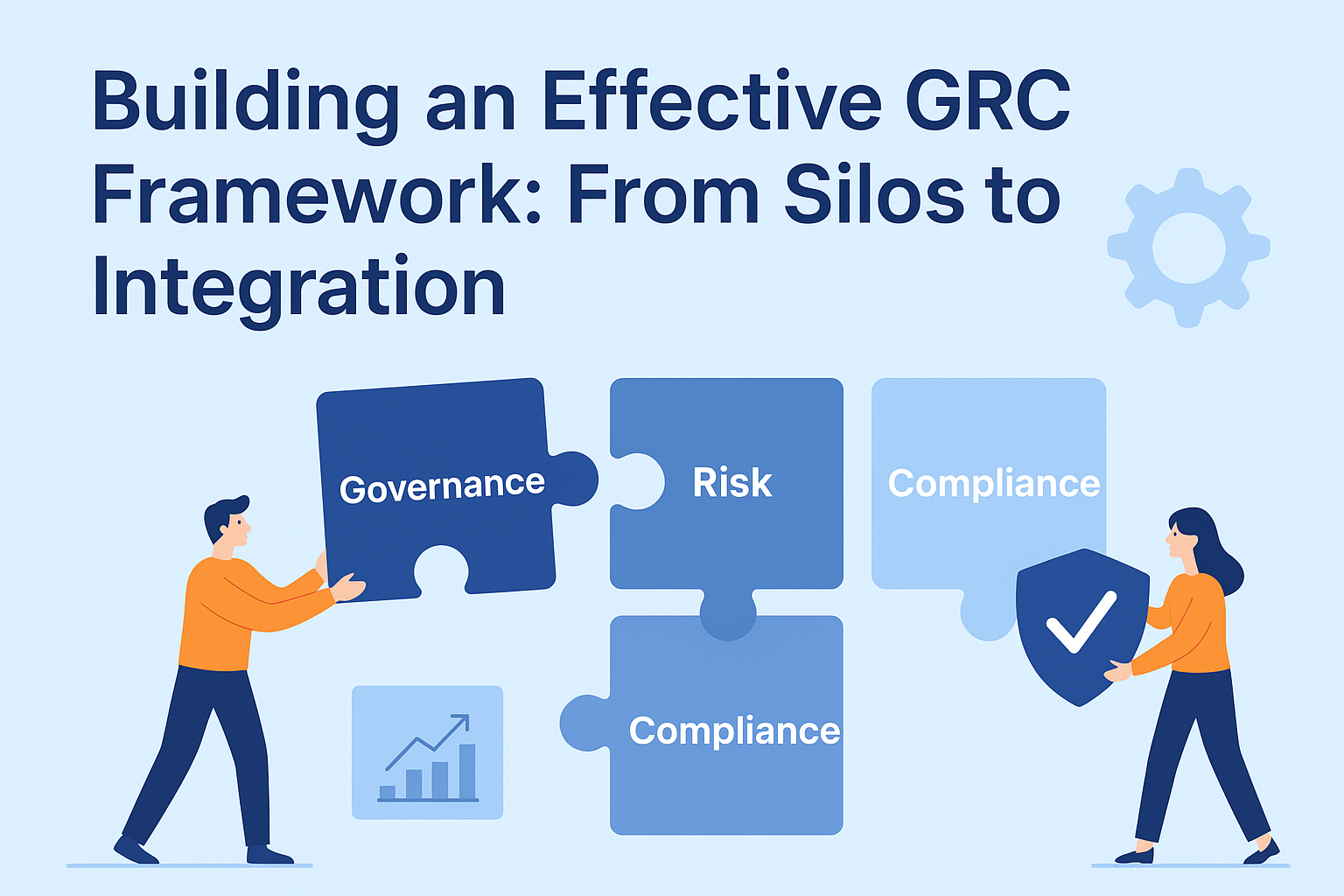
Organizations today navigate increasingly complex regulatory landscapes while managing escalating cyber threats and operational risks. Traditional siloed approaches to Governance, Risk, and Compliance (GRC) create inefficiencies, blind spots, and compliance fatigue. Modern organizations require integrated GRC frameworks providing holistic visibility, coordinated responses, and strategic decision-making capabilities. This guide presents a comprehensive approach to building effective GRC programs that transform compliance from burden to business enabler.
Understanding the GRC Triad
Governance
Governance establishes direction, oversight, and accountability structures ensuring organizations pursue objectives ethically, transparently, and sustainably. Key elements include:
- Board and executive leadership roles and responsibilities
- Strategic planning and objective setting
- Policy development and enforcement
- Performance measurement and reporting
- Stakeholder engagement and communication
Risk Management
Risk management systematically identifies, assesses, prioritizes, and mitigates threats to organizational objectives. Components encompass:
- Risk identification and assessment methodologies
- Risk appetite and tolerance definition
- Control design and implementation
- Continuous monitoring and reporting
- Incident management and lessons learned
Compliance
Compliance ensures adherence to laws, regulations, standards, and contractual obligations. Focus areas include:
- Regulatory requirement interpretation and mapping
- Control framework implementation
- Evidence collection and management
- Audit preparation and coordination
- Regulatory reporting and disclosure
Integration Value: Siloed GRC creates duplication (multiple teams assessing same risks), gaps (critical risks unaddressed), and inefficiency (redundant controls). Integrated GRC delivers 30-40% efficiency gains through shared infrastructure, coordinated assessments, and unified reporting.
The Business Case for Integrated GRC
Organizations implementing integrated GRC frameworks realize multifaceted benefits:
Operational Efficiency
- Reduced Duplication: Single risk assessments supporting multiple compliance frameworks
- Shared Controls: One control satisfying multiple requirements across regulations
- Streamlined Audits: Unified evidence repositories accelerating audit processes
- Automated Workflows: Technology-enabled automation reducing manual effort by 50-70%
Enhanced Risk Visibility
- Holistic view of interconnected risks across domains
- Early warning indicators enabling proactive mitigation
- Trend analysis identifying emerging threats
- Portfolio view facilitating prioritization and resource allocation
Improved Decision Making
- Executive dashboards providing real-time risk and compliance posture
- Data-driven insights supporting strategic planning
- Scenario analysis enabling informed risk-taking
- Performance metrics demonstrating program effectiveness
Regulatory Confidence
- Demonstrated commitment to governance and compliance
- Comprehensive documentation supporting regulatory inquiries
- Systematic approach reducing examination findings
- Proactive identification and remediation of gaps
Building Your GRC Framework: Step-by-Step Approach
Step 1: Current State Assessment
Begin by understanding existing GRC capabilities:
- Inventory GRC Activities: Catalog all risk management, compliance, audit, and governance activities across the organization
- Identify Ownership: Map responsibilities who manages what risks, oversees which compliance obligations?
- Document Processes: Understand current methodologies, tools, and documentation approaches
- Assess Maturity: Evaluate sophistication using frameworks like CMMI or proprietary maturity models
- Identify Pain Points: Document inefficiencies, gaps, duplications, and stakeholder frustrations
Step 2: Define Target Operating Model
Establish vision for integrated GRC program:
- Scope Definition: Determine which business units, risk types, and compliance obligations fall within GRC scope
- Governance Structure: Design oversight committees, roles, responsibilities, and escalation paths
- Three Lines Model: Clarify first line (business risk ownership), second line (risk/compliance oversight), third line (internal audit) responsibilities
- Integration Approach: Decide integration level shared technology, unified taxonomy, coordinated processes, or fully converged functions
- Success Metrics: Define KPIs measuring GRC program effectiveness and business value
Step 3: Establish Unified Risk Taxonomy
Common language enables integration:
- Risk Categories: Define hierarchical risk taxonomy covering strategic, operational, financial, compliance, and reputational risks
- Control Classification: Standardize control types (preventive, detective, corrective), categories, and attributes
- Regulatory Mapping: Create master list of applicable regulations with requirement breakdown
- Nomenclature Standards: Establish naming conventions ensuring consistency across documentation
- Relationship Mapping: Define linkages between risks, controls, regulations, and business objectives
Step 4: Implement Integrated Risk Management
Develop systematic risk management approach:
- Risk Assessment Methodology: Select quantitative, qualitative, or hybrid approach with clear criteria for likelihood and impact
- Risk Appetite Framework: Define organizational tolerance levels for different risk categories aligned with strategic objectives
- Control Framework: Implement baseline controls addressing common risks across multiple compliance frameworks
- Risk Register: Maintain centralized repository documenting identified risks, assessments, treatments, and ownership
- Monitoring Program: Establish Key Risk Indicators (KRIs) providing early warning of deteriorating conditions
Step 5: Compliance Program Integration
Connect compliance obligations to risk and control frameworks:
- Regulatory Inventory: Comprehensive list of applicable regulations, standards, and contractual obligations
- Requirement Mapping: Link specific regulatory requirements to implemented controls
- Evidence Management: Centralized repository organizing compliance evidence by regulation and control
- Obligation Tracking: Systematic approach monitoring regulatory changes and updating requirements
- Assessment Calendar: Coordinated schedule preventing assessment fatigue and optimizing resource utilization
Step 6: Technology Enablement
GRC platforms transform manual processes into efficient, automated workflows:
Essential GRC Platform Capabilities
- Integrated Risk Management: Centralized risk register, assessment workflows, treatment tracking, and reporting
- Compliance Management: Obligation tracking, control mapping, evidence collection, and audit management
- Policy Management: Centralized policy repository with version control, approval workflows, and attestation tracking
- Incident Management: Issue and incident tracking with workflow automation and resolution monitoring
- Vendor Risk Management: Third-party assessment, due diligence, and continuous monitoring
- Reporting and Analytics: Dashboards, executive reporting, trend analysis, and drill-down capabilities
Platform Selection Criteria
- Integration capabilities with existing systems (SIEM, ITSM, ERP)
- Scalability supporting organizational growth
- Configurability enabling customization without extensive development
- User experience promoting adoption
- Vendor viability and roadmap alignment
- Total cost of ownership (licensing, implementation, maintenance)
Step 7: Process Standardization and Automation
Consistent processes enable integration:
- Risk Assessment Cadence: Quarterly or semi-annual enterprise risk assessments with continuous monitoring
- Control Testing: Automated control testing where possible, with systematic manual testing schedules
- Issue Remediation: Standard workflow from identification through resolution with accountability and timelines
- Change Management: Integrated process ensuring risk and compliance implications are assessed for all changes
- Reporting Cycles: Standardized reporting to board, executive leadership, and regulatory authorities
Step 8: Culture and Change Management
Technology and processes fail without cultural transformation:
- Tone from the Top: Visible executive commitment demonstrating GRC importance
- Risk-Aware Culture: Embed risk considerations in decision-making across all levels
- Training Programs: Role-based training ensuring stakeholders understand responsibilities
- Communication Strategy: Regular updates highlighting program value and success stories
- Incentive Alignment: Performance metrics and compensation tied to GRC objectives
GRC Maturity Journey
Organizations progress through maturity stages:
Level 1: Ad Hoc
- Reactive approach to risks and compliance
- Siloed activities with limited coordination
- Manual processes and spreadsheet-based management
- Inconsistent documentation and evidence
Level 2: Developing
- Defined GRC processes with documented procedures
- Dedicated GRC personnel
- Basic GRC tools implementation
- Regular risk assessments and compliance monitoring
Level 3: Defined
- Enterprise-wide GRC framework with integrated processes
- Comprehensive GRC platform implementation
- Unified risk and compliance taxonomies
- Coordinated assessment and monitoring activities
Level 4: Managed
- Quantitative risk management with metrics-driven decisions
- Automated workflows and continuous monitoring
- Real-time dashboards and predictive analytics
- Integrated third-line assurance
Level 5: Optimized
- Continuous improvement culture with lessons learned integration
- Advanced analytics and machine learning for risk prediction
- Strategic GRC providing competitive advantage
- Industry-leading practices and thought leadership
Maturity Insight: Don't pursue Level 5 immediately. Most organizations achieve maximum ROI at Level 3-4. Focus on building solid foundations before pursuing optimization. Premature sophistication creates complexity without corresponding value.
Common Implementation Challenges
Challenge: Organizational Resistance
Solution: Demonstrate quick wins, involve stakeholders in design, communicate value clearly, and provide comprehensive training.
Challenge: Data Quality Issues
Solution: Implement data governance, establish data ownership, conduct initial cleanup, and enforce ongoing data quality standards.
Challenge: Technology Complexity
Solution: Phase implementation starting with critical capabilities, leverage vendor expertise, and ensure adequate training and support.
Challenge: Resource Constraints
Solution: Prioritize based on risk and compliance obligations, leverage automation for efficiency gains, and consider managed services for specialized functions.
Challenge: Siloed Thinking
Solution: Establish integrated governance structure, implement shared KPIs, and create cross-functional teams.
Measuring GRC Program Success
Effective metrics demonstrate value:
Efficiency Metrics
- Time to complete risk assessments
- Audit preparation effort and findings
- Control testing coverage and frequency
- Issue remediation cycle time
Effectiveness Metrics
- Number of significant risk events prevented
- Regulatory examination findings trend
- Control effectiveness ratings
- Risk posture improvements
Strategic Metrics
- Board and executive engagement levels
- Risk-aware decision-making prevalence
- GRC-enabled business opportunities
- Stakeholder confidence in risk management
Future of GRC: Emerging Trends
Artificial Intelligence and Machine Learning
AI enhances GRC through automated risk identification, predictive analytics, natural language processing for regulatory intelligence, and anomaly detection.
Continuous Controls Monitoring
Real-time control effectiveness assessment replacing point-in-time testing, enabling immediate issue identification and remediation.
Integrated GRC Ecosystems
Deep integration with enterprise applications (ERP, ITSM, SIEM) creating seamless risk and compliance data flows.
RegTech and SupTech
Regulatory technology automating compliance obligations, while supervisory technology enables regulators to monitor compliance remotely.
ESG Integration
Environmental, Social, and Governance considerations becoming core GRC components as stakeholders demand sustainability accountability.
Conclusion: GRC as Strategic Enabler
Effective GRC frameworks transform risk and compliance from reactive necessities into strategic capabilities enabling confident decision-making, efficient operations, and sustainable growth. Organizations viewing GRC as integrated discipline rather than separate silos realize significant efficiency gains, enhanced risk visibility, and regulatory confidence.
The journey requires executive commitment, cultural transformation, process standardization, and technology enablement. While implementation demands investment, the returns reduced losses, optimized compliance costs, improved stakeholder confidence, and strategic agility far exceed the effort.
Organizations beginning GRC transformation today position themselves advantageously for tomorrow's challenges, building resilience, adaptability, and excellence that distinguish market leaders from followers.
Ready to transform your GRC program? RACCon connects organizations with experienced GRC consultants, technology vendors, and peer practitioners sharing lessons learned from successful implementations.